
How to Choose the Right Developmental Editor & Avoid the Wrong One
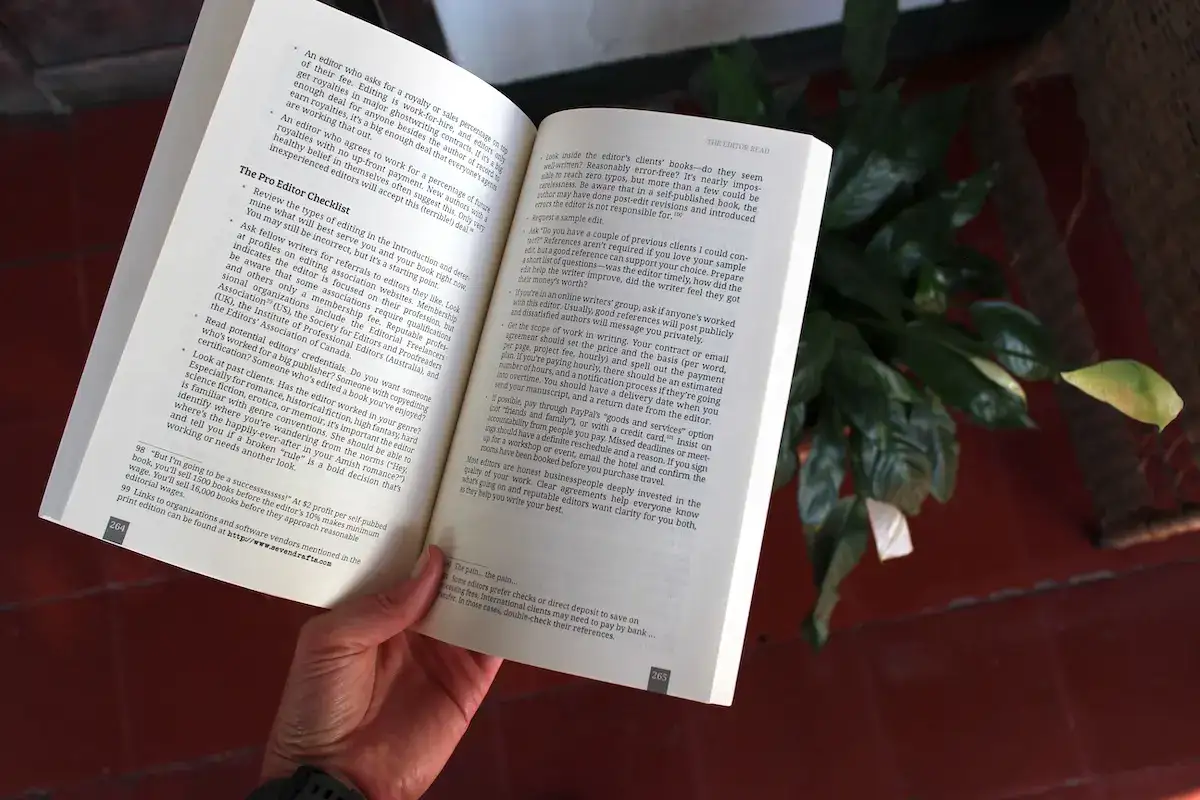
If you’re here, it means you’re ready to hire a developmental editor. Awesome! But being ready doesn’t mean it’s easy or that you know how to proceed. You may wonder:
How do I know what to look for in an editor?
Where do good editors hang out?
How will I figure out if an editor is a good fit for me and my book before I outlay all the $s?
Finding an editor who likes your genre, is a great match, and whose feedback is on-point is a lot easier said than done. As an editor, sometimes I know right away that I won’t be the right choice for a particular writer or project. Other times, it’s harder to tell.
Searching can be time-consuming, and even awkward and uncomfortable. It’s easy to go with the first editor you find that seems okay, or get tired of the process and pull the trigger so you can move forward.
But a developmental edit is a big financial investment, and it will likely shape your creative work—and possibly your creative trajectory. That makes this a decision worth slowing down and doing well.
Don’t worry, I’m here to help you reduce the risks, avoid red flags, protect your time, money, and manuscript, and make an informed choice.
By the end of this post you’ll:
- Know your editor preferences and non-negotiables
- Have a list of places to look for a good editor
- Know what to tell an editor when you reach out
- Have a list of questions to ask
- Know what red flags to watch out for
- Know about sample edits and discovery calls—and how to use them to determine fit
And if you’re curious about working with me, this post will also give you the tools you need to evaluate whether my approach is a good fit for you—or at least how to find out.
Finding a Good Fit

Before you start looking for a developmental editor, it’s a good idea to spend a little time thinking through what is important to you. What are you preferences and your non-negotiables?
I recommend thinking through what you want in terms of an editor’s experience, rates, availability, bookside manner, communication style, and how they handle payments and contracts.
1. Experience
Does the editor read and enjoy your genre? (This should be non-negotiable!)
Has the editor worked in your genre before? If not, is that a problem? What would make it a problem? What would make it not a problem? For example, the editor loves reading this genre and has worked in cross-over genres or has written in this genre.
2. Rates
Can you afford this editor’s rates?
If their rate is a bit out of reach, but you still really want to work with them, can you save up enough to hire them? How long would that take? Are you willing to wait/work extra hours? (I discuss specifics about rates in my intro post to developmental editing.)
3. Availability
Is the editor available, or bookable, within a time period you are okay with?
Does their availability give you the time you need to get the book ready? If they aren’t available when you would prefer, are you okay with waiting?
4. Bookside Manner
Does the editor’s manner (in discover calls, in a sample edit, in email) make you feel comfortable, confident, and in good hands?
Does their editing style work for you? (Blunt, harsh, gentle, honest-but-caring, leading with curiosity, etc.) If you’re curious what this could look like, check out this example.

5. Communication
Does the editor communicate clearly what to expect, how the process will go, how much you will likely hear from them?
Are their communications with you clear, professional, polite, and above-board?
6. Legalities
Is everything laid out clearly in a contract regarding scope, delivery time, payment (when, how much, whether they require a down payment, milestone payments, or something else)?
Do they tell you the method of payment, and what will happen if either party decides to back out? Does their payment method work for you? If not, are they flexible enough to offer you an alternative that does?
7. Use of AI Tools
Does the editor use AI tools? If so, which ones? Are they going to put your manuscript through ChatGPT, or use a tool like AutoCrit to generate additional insights for you? Or do they use AI only for light proofreading? Do you feel comfortable with their use of AI and AI tool?
Putting it All Together
Determine your criteria, everyone is different!
For example, I don’t care if a developmental editor has worked in publishing. The most important things to me are finding an editor who reads and loves my genre and offers great, on-point advice that makes me go “Aha!”
I prefer an editor who leads with curiosity, who is honest, and who gives clear feedback with examples and suggestions. I also appreciate hearing what I did well, what my strengths are, and what the book’s strengths are.

Since the wait is difficult for me, I would ideally like to get some communication during that time rather than radio silence. For example, a quick email from the editor saying, “I just started reading and am really enjoying it so far,” or “I’m about halfway through.” Because of my preferences as a writer, I touch base with my editing clients at least once after I’ve started.
Once you know more or less what you’re looking for, it’s time to start your search.
Where to Find a Developmental Editor
Now that you know what is important to you in a developmental editor, it’s time to look for editors who could be a good fit.
Take your time, enjoy the process, and think of it as a way to explore who you want to work with. Even those that aren’t a good fit will help you clarify what you’re looking for, what you like and appreciate in an editor, and what isn’t right for you. See? Mindset matters here too!

1. Blogs and Podcasts
Blogs and podcasts are often a great way to find and learn about developmental editors. Since most of us editors love writing and reading, it makes sense that we hang out on word-related platforms, like blogs, and wax eloquent about bookish and writerly stuff on podcasts.
The good news is, you’ve already found at least one developmental editor this way: me!
Hopefully, finding me and my posts on developmental editing have already given you lots of great information, more confidence and direction, and a sense of who I am and my editing style. I would of course love to explore working together.
But even if we aren’t a match, blogs and podcasts are one great way to get to know developmental editors.
2. Writing Summits
Besides offering great opportunities to improve your craft and connect with other writers, summits can be excellent places to scope out potential developmental editors. (They’re also fantastic places to develop your self-editing chops and save editing $s.)
I’ve gone to many great craft talks led by developmental editors. They offer amazing insights I can apply to writing and editing my novels, and also give me a feel for an editor’s style, personality, and skillset.
What do I mean by skillset? Well, some editors excel at structure, others at interiority, others at improving scenes. This isn’t to say they aren’t all-around great editors (I’m sure they are), simply that they’ve found a particular groove.
You can also find editor’s by making use of the community-building aspects of the summit, networking, asking questions, chatting with people in the meet-and-greets or Zoom breakouts, and asking questions. Ask other writers for recommendations, ask attendees what they do. I guarantee there will be editors in the ranks.
Jot down their names, check out their websites and offers, and hop on a discovery call with those that seem promising to chat about your book.
Some writing summits I recommend that you attend (with free ticket options) and where I know developmental editors hang out include: Escape the Plot Forest, Find Your Readers, Perfect Your Process, and Worldshift. I’m sure there are many others, but these are summits I’ve personally attended.

3. Writing Conferences
Another option, if you have the budget for it, is to attend in-person writing conferences. Although I have only attended one in my life, as a college student (I live in Central America and have a tiny travel budget), I’ve heard from other editors that this is one of the main places they connect with potential/future clients.
I really enjoy meeting my clients/potential clients on Zoom, and I imagine that in-person would be even better. It’s a great way to network, connect, ask questions, and get a feel for an editor’s vibe.
4. Writing Groups
Asking other writers for recommendations is also a legit way to begin your search. If you’re part of a writing group, ask others in your group who they’ve worked with and recommend, how the process went for them, and for the editor’s contact information.
If the editor also happens to be a part of the group (many of us are also writers), they might offer discounts to members of their writing group. And as an added bonus, being in a writing group can help you practice evaluating feedback.

5. FB Groups/Social Media
I’m not a social media buff, but I know that Facebook is loaded with writer groups. This is another place you can ask for recommendations. Say what you are looking for and ask about the experience of other writers. Even though I hardly spend any time on socials, I’ve seen editors answer writer queries in these types of groups.
6. Word-of-Mouth Referrals
Aside from asking other writers in your community, online groups, and socials, you can also ask advice of other editors and even small publishing houses. The second developmental editor I hired was recommended to me by a small publishing house I submitted my novel to. I couldn’t have found her otherwise, and it’s always nice to have that extra trust factor. (If you’re curious about how that edit went, check out this post.)
And if you chat with an editor and both of you determine that it isn’t a good fit, the editor probably has a list of people to refer to you.
7. Freelance Editing Platforms
Another option is to peruse editor profiles and gigs on online platforms like Reedsy (where you’ll find publishing professionals), Upwork, and Fiverr, which is a mixed bag of options.
Fiverr is where I started out as an editor, offering such low rates that I was practically working for free, but gaining experience and five-star ratings along the way. The platform has its pros and cons, but it gave me my start and the opportunity to work with a wide range of writers in a variety of genres.
If you opt to search for an editor on one of these platforms, the tips and criteria in this post should help just as much as if you use other means.
What to Tell an Editor When You Reach Out

When you reach out to an editor, it’s helpful to tell them about yourself and your manuscript. Let them know the genre and subgenres, the word count, where you’re at in the process, and what you’re looking for in an editor. If your book has trigger warnings, it’s helpful to include them as well.
As an editor, I like to ask potential clients these questions as well:
- What are your goals for your manuscript? (For example: traditional publishing, self-publishing, personal/family project.)
- Have you worked with an editor before? If so, how did that process go? If not, what are your goals/concerns?
Questions To Ask Before Hiring an Editor

Ideally, the editor’s website, services page, etc. will give you a sense of their editing chops, what genres they accept and don’t accept, and what their initial process is (sample edit, discovery call, online form). But let’s face it, not all editor’s websites are that informative.
Whatever the case, you may want to ask the editor questions (referring back to your handy list of preferences and non-negotiables) about:
- What genres they enjoy/don’t enjoy
- Their editing experience (in general and with your genre)
- If any of the trigger warnings in your book will be problem
- Previous client contact info to ask questions/If they can share prior client reviews
- Questions about their rates, availability, turnaround time, process, and contracts
- Questions about how they use AI tools, and which tools they use
- Any other questions you have that would help you feel comfortable and determine whether their editing style is a good fit for you
Sample Edits & Discovery Calls: What You Need to Know
Editors have different processes and offers (as you’ll soon discover as you haven’t already) but in the initial stages of exploring working together, sample edits and discovery calls are common.
Some editors offer one or the other or both.
Sample Edits
In a sample edit, the editor will work on a pre-determined number of pages, leaving in-line comments and offering initial feedback, just as they would in your full manuscript. This can give you a sense for the editor’s style, the kinds of comments they leave, and their bookside manner.
Most editors offer free sample edits. I limit mine to about 1000 words, but I’ve also had people pay me to do longer chunks, such as a whole chapter, because they wanted a greater sense of my style. In a sample edit, I leave comments just as I would in a normal developmental edit, and I include a paragraph or two at the end with my general takeaways, insights, and recommendations.

Of course, it’s important to know that a sample edit can only tell you so much. It’s only a small portion of the whole, it may be out of context, and there’s only so much an editor can determine based on a few pages (although, depending on the writer, they may be able to determine a lot). What I mean by this is that I won’t be able to evaluate how well your book is structured or how well-paced based on 1000 words, but I can give you my impressions of the setting, the world, and the pacing of that particular section, note any areas where I’m confused, note wordiness or on-the-nose dialogue, and other things specific to the 1000 words I’ve read.
Many of my clients said that seeing my sample edit cinched the deal. They loved my comments, recognized that I was offering what they wanted, and proceeded to hire me with confidence and enthusiasm.
If you get a sample edit:
- Recognize its limitations.
- Look for insights. Do the comments and suggestions feel revelatory/on-point?
- Do you like the editor’s style and tone?

Signs you may want to talk further
You like the comments, you experienced an “aha!” moment or gained insight, but you still have questions and concerns.
For example, one of my clients thought she wanted a ghost-writing/re-writing services, but once we chatted on a discovery call, she felt comfortable moving forward with the developmental edit, and then talking about additional support if she felt she still needed it once she got that feedback. (Which, incidentally, she didn’t.)
Signs the editor may not be a good fit
- The editor’s comments don’t resonate or worse, feel completely off base
- The editor leave zero positive feedback (assuming this is important to you!)
- You don’t feel comfortable with the editor’s manner or communication style
If the editor turns out not to be a good fit, or you find someone else who is a better fit, thank them politely for their time (they did give you time!) and move on in your search.
As an editor, I appreciate those people who have let me know I’m not a good fit rather than ghosting me or leaving me hanging.
Discovery Calls
I love having discovery calls with clients and potential clients. They are a boon for both me as an editor and for the potential client.

Discovery calls are a great way for you to:
- Put a face to the name
- Find out who the editor is as a person
- Get a sense of their personality and the kind of advice they give
- Ask questions about them, their experience, their process, etc.
- Build rapport and feel more comfortable moving forward.
On the flip side, for the editor (at least me as an editor), discover calls help:
- Put a face to the name
- Get a clearer sense of the writer’s personality, goals, influences, and what they care about in the edit
- Ask questions about their manuscript
- Build rapport
I love meeting writers and gaining important insights that will help me do the best possible job. Although I get thoroughly invested in every project I take on, doing my best to help each writer succeed, I feel this even more strongly when I get to chat with the writer in person.
It makes the whole process more personal.
Red Flags to Watch Out For
Just as it’s important to know what to look for in an editor, it’s also important to know what to watch out for. Here are important red flags to consider when contacting editors:
1. Unclear offering/expectations
I like my clients to know exactly what I offer, lay everything out clearly, and make sure we’re on the same page. This is why I like working with contracts, but even when I don’t, I lay out everything as clearly as I can. If an editor is cagey or unclear about what you’re going to get and how long it’s going to take, you should be wary.
2. Extremely high or extremely low rates
If an editor is offering a crazy high or a cazy low rate, you should ask why. If the rate is very low, it could be that they are just starting out. I offered very low rates when I started, and I think it’s only fair.
It’s like going to a beauty school to get a haircut. You might end up with an awesome haircut, or you might not. It could work out great, or it could work out not so great.
Alternatively, an editor may offer extremely high rates. If this is the case, they should be able to justify this based on their level of experience, expertise, and demand.
3. Won’t offer a contract or NDA if you ask for one
Every editor should be very clear about how much they’re charging, the timeframe they need to complete the edit, payment details, their use of AI, and other important details like that, regardless of whether they offer a contract as standard or not. But if you ask for one, they should absolutely be willing, just as they should be willing to offer an NDA if you ask for one.
I don’t typically include an NDA in my contracts, but if a client requests one, I’m happy to sign. I generally like to work with contracts, at least with first-time clients, and even after that, I lay everything out clearly in writing.
4. Uses AI tools without your permission
Okay, this could be tricky to figure out, but if the editor promises to get your book back to you in an insanely short amount of time, this could indicate the use of AI. Ask for a sample edit and note whether they left comments and tracked changes and if they sound like an actual real-live human.
I’ve spent enough time reading ChatGPT outputs that I know its typical turns of phrase and rhythms of speech. You know what I mean: gushing compliments followed by “it’s not this, it’s that.”
5. Won’t offer a free sample or discovery call
Some editors are so busy that they can’t offer a sample, so that isn’t necessarily a red flag, but they should still have a body of work to show you their style and how they work, such as podcasts, free editing courses, blog post series, summit talks, and other things like that.
Offering a discovery call is pretty standard practice. If they don’t want to meet with you on a video call, I would ask why.
6. Won’t offer testimonials or prior client contact information
If you don’t see any client testimonials, ask the editor for them. Ask for the contact information for a couple of their previous clients so you can ask about their experiences. If they aren’t willing to offer these, you should run away!
If they do offer them, call those previous clients. Do your due diligence.
Okay, caveat: if an editor can’t provide this, they should be able to explain why not. Maybe you’re their first client. If that is the case, are you okay with that?
Recovering From a Bad Experience

Maybe you’ve been burned by feedback in the past: blasted by someone who just didn’t get what you were trying to do, dropped by an editor halfway through a project, or inundated by negative comments for pages on end without a whisper about what you did well.
While I wouldn’t wish those experiences on anyone, many of us writers have experienced these things. If that’s the case for you, and it’s made you trigger shy, take a step back, grieve your creative wounds, and take the time you need to build trust with an editor.
Consider hiring an editor only for a chapter or two, get a sample edit, and ask for a discovery call. Make sure that both you and the editor are comfortable with the contract and that you understand the clauses.
Use the process I’ve outlined in this post. Refer back to your list of preferences and non-negotiables and watch out for red flags.
Pay attention to how you feel, and trust your judgement. You’ve got this!
Could We Be a Good Fit?
As you’re coming to end of your search for a developmental editor, you might be curious about working with me. Or, maybe you want some more insight about how one particular developmental editor works so that you have a point of comparison as you reach out to others, ask questions, hop on discovery calls, and get a sample edit.
Either way, I’ve got you covered. In my next post, I’ll share my approach to developmental editing, discussing what I do and why.